
Study on the mechanism of catalyst
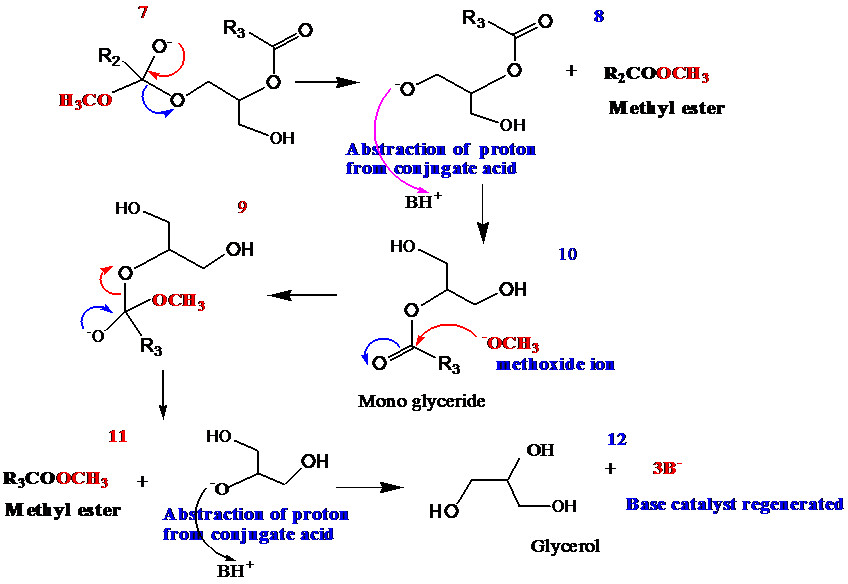
Core tip: catalyst research action mechanism catalyst research action mechanism catalyst can catalyze chemical reaction, but it will not change itself. The common core problems of catalytic reaction are auxiliary electron transfer and reaction.
A substance that catalyzes a chemical reaction but does not change itself. The common core problem of catalytic reaction is auxiliary electron transfer and reactant contact. Electron transfer is mainly assisted by transition metal elements. Whether hydrogen, as a unique substance, can play a unique role in catalytic reaction is worth studying and considering. It is further speculated that electron transfer is also common in biological systems, and enzyme catalysis is also the basic reaction mode. Whether hydrogen will affect and interfere with the electron transfer process, and if it can produce this effect, it may be the key mode in which hydrogen plays a role that we have always wanted to know. In 2015, British scholars found that hydrogen can be consumed in large quantities in animals, which indicates that the bioavailability of hydrogen is very high. Without the assistance of enzyme catalysis, the possibility of chemical reaction degradation of hydrogen in the body with low concentration and body temperature is almost zero. This considerable change must hide the great secret of the biological effect of hydrogen.
90% of industrial chemical processes use catalysts, which is more important in the production of products such as energy, petrochemical, medicine and chemical fertilizer. At least 15 Nobel prizes in chemistry are awarded to catalyst research. There are still tens of millions of chemists in the world trying to invent and optimize catalysts. The purpose of using catalyst is to obtain accurate and controllable reaction, reduce reaction steps and save energy resources, which is not only the inevitable requirement of the sustainability of chemical industry, but also conducive to solving the increasingly severe problems of abnormal climate and environmental pollution. Catalyst is an important feature and realization way of "green chemistry". Catalyst is also an important basis for solving the energy crisis and a basic means of using more inert and cleaner energy than traditional fossil fuels. For example, it is easier to decompose water into hydrogen and oxygen by using catalysts, and make efficient use of biological raw materials and carbon dioxide. Melanie Sanford, a chemist at the University of Michigan, believes that these models are close to maturity in ideas and technology.
Industrial catalysts usually contain a metal ion, which is responsible for opening and connecting chemical bonds, surrounded by some carbon chain ligand groups, which control the contact speed between reactants and metal ions. The research in this field is generally to modify the ligands to produce specific catalysts. Many catalysts need rare and precious metals such as palladium, platinum, ruthenium and iridium. Chemists are also trying to find cheap alternative metals, such as elements with large abundance on the earth, such as iron, nickel and copper. Some are also trying non-metallic catalysts.
Like palladium / platinum, nickel is also a transition metal element. The three elements are listed in the periodic table and have similar chemical properties. It is considered to be the most potential candidate for palladium / platinum. Hu Xile, a synthetic chemist at the Swiss Federal Institute of technology, first reported the multifunctional nickel ion catalyst complex in 2008. The complex has a nickel ion, a ligand around it binds to its three sites, and the fourth site plays a catalytic reaction. Some palladium catalysts also use similar ligands. The radius of nickel ions is 20% smaller than that of palladium ions. Therefore, matching with nickel ions, they have to narrow the ligands. They replace phosphorus atoms with small nitrogen. Now this series of catalysts based on nickel ion have been commercialized.
Fluoride is widely used in the fields of medicine, agricultural chemicals and medical imaging. The preparation of fluorocarbon is the core technical difficulty. The popular manufacturing technology of fluorocarbons requires specific valuable raw materials or highly corrosive hydrogen fluoride gas. In 2013, Sanford group established a safer method for the preparation of fluorocarbons with potassium fluoride and copper catalysts. The catalyst uses a compound to remove three electrons, which greatly enhances the ability of the catalyst to absorb electrons. It can compete for some electrons from extremely stingy fluorine ions, which makes fluorine easier to bind to carbon atoms.
Although the catalytic capacity of homogeneous catalyst is relatively strong, the catalyst itself is sometimes fragile. Long-term heating and molecular collision with reactants can lead to the destruction of catalyst structure, ligand separation and loss of catalytic activity. This is why many large-scale industrial catalysts use heterogeneous catalysts, which are fixed on solid materials and installed where the reaction system passes through. A typical example is a mixture of platinum and other metal powders in an exhaust gas treatment catalytic converter.
In the past, it was very difficult for chemists to design heterogeneous catalysts, because it was difficult to study the catalytic activity in solid materials. In most cases, trial and error method can only be used for optimization. Scott said that now the situation is different. System control can be used for material research. In particular, the rapid development of nanotechnology allows chemists to quickly analyze solid catalysts.
Li can, director of Dalian State Key Laboratory of catalysis, Chinese Academy of Sciences, used platinum and cobalt oxide nanoparticles to produce a catalyst for water decomposition by sunlight. He pasted nanoparticles on bismuth vanadium oxide semiconductor materials, pasted different types of particles on each crystal surface, and then immersed the crystal in water for illumination. Photons hit the semiconductor and release electrons to form an electric current. Nanoparticles use the electric current to separate water into hydrogen and oxygen. Oxygen is formed from cobalt oxide particles, while the cathode attracts hydrogen ions to collect in platinum nanoparticles to form hydrogen.
Audrey Moore, a chemist at McGill University in Canada, is helping the pharmaceutical, cosmetics and food industries solve a troublesome problem. The production of drugs and food often requires toxic heavy metal ion catalysts, such as palladium, ruthenium and platinum. The products can be sold through a series of detailed and expensive purification steps. Moore is choosing iron catalysts to replace these toxic ions.
If complex macromolecules such as steroids, antibiotics or hormones are synthesized, a big challenge is that these molecules have chirality. There can be four directions around carbon atoms, resulting in the possibility of forming two mirror chiral molecules for each carbon atom. Complex molecules contain a large number of carbon atoms. If any carbon atom has a mirror error, there may be wrong molecules that do not meet the requirements. More extreme is thalidomide (thalidomide) invented in Germany in the 1950s to treat the reaction of pregnant women to early pregnancy. One chiral structure can not only play a therapeutic role but also be safe, but another chiral molecule can cause serious limb defects and deformities of the fetus.
Biomass raw material molecules contain a variety of chiral molecules, which is almost impossible to distinguish. Hartwig said that it is impossible for small molecule catalysts to recognize the differences of these molecules, but biocatalyst protease has the potential to recognize these chiral molecules. Another advantage of protease is the use of aqueous solution and body temperature conditions, which is an environmentally friendly potential.