Russian are making superconducting magnetic lens
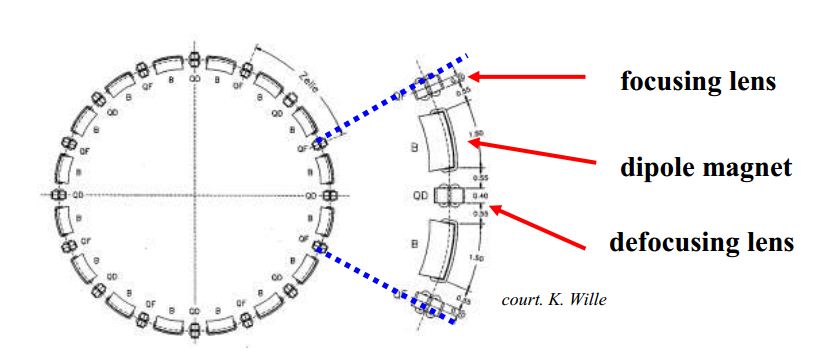
Russian physicists in Siberia are developing superconducting magnetic lenses for the production of electron-positron colliders, in which electrons with energy of 2-5 electron volts collide with positrons and produce C-quarks.
This was reported by Yevgeny Levichev, deputy director of the Institute of Nuclear Physics of the Siberian Branch of the Russian Academy of Sciences.
According to him, there are some key components that have never been manufactured in the past.
The ultimate focusing superconducting magnetic lens currently being manufactured, its focusing ability can reach very small submicron poles.
This project can be used to study phenomena that go beyond basic physical theories, especially the destruction of symmetry between matter and antimatter.
It can help unlock the secret that antimatter almost completely disappears in the observable universe.